Drone-as-a-Service in Belgium: drone operations without owning a single aircraft

Drone-as-a-Service (DaaS) is a contractual model under which an operator provides the aircraft, the certified pilots, the maintenance and the regulatory compliance on subscription. The client organisation gains operational drone capability without buying hardware or running a fleet.

Buying a fleet, recruiting and certifying pilots, keeping up with EASA rules, absorbing hardware obsolescence: who in your organisation is going to carry all that? For most Belgian public bodies and industrial operators, the honest answer is nobody. That is exactly the problem a DaaS contract solves, with a single operator accountable end to end. This page explains what an all-inclusive arrangement covers, when it beats buying or hiring, and how far the model reaches, up to autonomous dock-based surveillance with data hosted in Belgium. At PIM Consult, drone integrator in Belgium, we have supported more than 300 organisations since 2017, among them Infrabel, Elia and the Belgian Federal Police.

Key points:

Contents

  1. What is Drone-as-a-Service (DaaS)?
  2. What a Drone-as-a-Service contract covers
  3. Buy, hire or DaaS: which model for your operations?
  4. DaaS with a dock: 24/7 autonomous surveillance
  5. Your data stays in Belgium: NIS2 and sovereignty
  6. Use cases: who uses drone as a service in Belgium?
  7. Getting started with PIM Consult
  8. FAQ

What is Drone-as-a-Service (DaaS)?

Drone-as-a-Service means consuming drone operations as a recurring service: the operator owns the fleet, employs the pilots, maintains the hardware and answers for the compliance of every flight, in return for a subscription set out in the contract. You buy an outcome, delivered inspections, surveillance in place, up-to-date maps, not machines.

The term comes from software: just as SaaS moved IT from licence purchases to subscription, DaaS moves the drone from a capital investment to an outsourced operational capability. The difference from a simple one-off job comes down to one word: recurrence. A conventional supplier flies once; a drone as a service contract establishes a permanent capability, with availability commitments and a scope agreed in advance.

Here the aim is direct: to show you what such a contract covers in practice, and when it is the right choice for a Belgian organisation.

What a Drone-as-a-Service contract covers

A full DaaS contract covers four areas: the hardware and its sensors, the pilots and their certification, maintenance including fleet upgrades, and the regulatory compliance of operations. What you no longer have to handle reads as the mirror image: no investment, no recruitment, no regulatory watch.

AreaIncluded in the contractWhat you no longer handle
Hardware and sensorsFleet sized for your missions, sensors to match (zoom, thermal, LiDAR as required)Purchase, capital tied up, technology choices, obsolescence
PilotsCertified remote pilots, trained for your environmentsRecruitment, continuing training, availability
MaintenanceServicing, repairs, hardware replacementSpare parts stock, downtime, manufacturer support
ComplianceOperational authorisations, risk assessments, flight-related insuranceEASA watch, SORA files, operator liability

Hardware and sensors matched to your missions

The contract starts with sizing the fleet: which aircraft, which sensors, for which missions. The operator invests, not you; your budget moves from capital expenditure to a predictable operating cost, with no upfront investment. When the technology moves on, the fleet moves with the contract.

Certified pilots and EASA/SORA compliance

Every flight is carried out by remote pilots certified under the European drone regulation (EASA). For complex operations in the specific category, the operator builds the SORA risk assessment files; flight beyond visual line of sight (BVLOS) requires dedicated authorisations that few organisations can carry alone. In the DaaS model, that operator liability rests with the operator, not with your teams. With us it is carried by a dedicated team, including Stéphane Tilmant on SORA and BVLOS files and Vincent François on EASA standard scenarios.

Maintenance, replacement and fleet upgrades

A grounded professional drone produces nothing. The contract covers preventive servicing, repair and replacement of hardware, as well as renewing aircraft at end of life. Obsolescence, which wrecks the business case for buying outright, becomes the operator’s problem.

Buy, hire or DaaS: which model for your operations?

The answer lies in how often your missions recur. A one-off need is best served by hiring a mission with a pilot; daily internal use by an already trained team can justify buying; between the two, as soon as missions repeat and you have no wish to become a drone operator, DaaS wins on total cost of ownership.

Let us be direct: buying outright is still the right call in some cases. If your teams fly every day, you have a trained lead and you accept carrying compliance in house, owning the fleet stands up. We know that situation well: we equip and train those organisations as a DJI Enterprise integrator. DaaS is for the others, the majority, who want the outcome without the trade.

CriterionBuying outrightHiring a missionDrone-as-a-Service
Upfront investmentYours (hardware, training, insurance)NoneNone
Recurring costMaintenance, pilots and regulatory watch at your expenseBilled per mission, variableSubscription set in the contract
Time to get runningLong: purchase, certification, authorisationsShort, but renegotiated every missionShort after initial scoping, then permanent
EASA/SORA complianceYou are the accountable operatorCarried by the supplier, mission by missionCarried by the operator for the life of the contract
DataFull control, infrastructure to buildDepends on the supplier, often a third-party cloudHosting set in the contract, On-Premises possible
Scaling upNew investment at every stepLimited to one-off availabilityAdjust the contract (aircraft, frequency, sites)

What does it cost? A contract is priced once the need has been scoped: number of sites, mission frequency, sensors, deliverables.

Let us talk about your missions. Describe your recurring need and we will come back with a contract scope, not a brochure. Request a Drone-as-a-Service proposal

DaaS with a dock: 24/7 autonomous surveillance

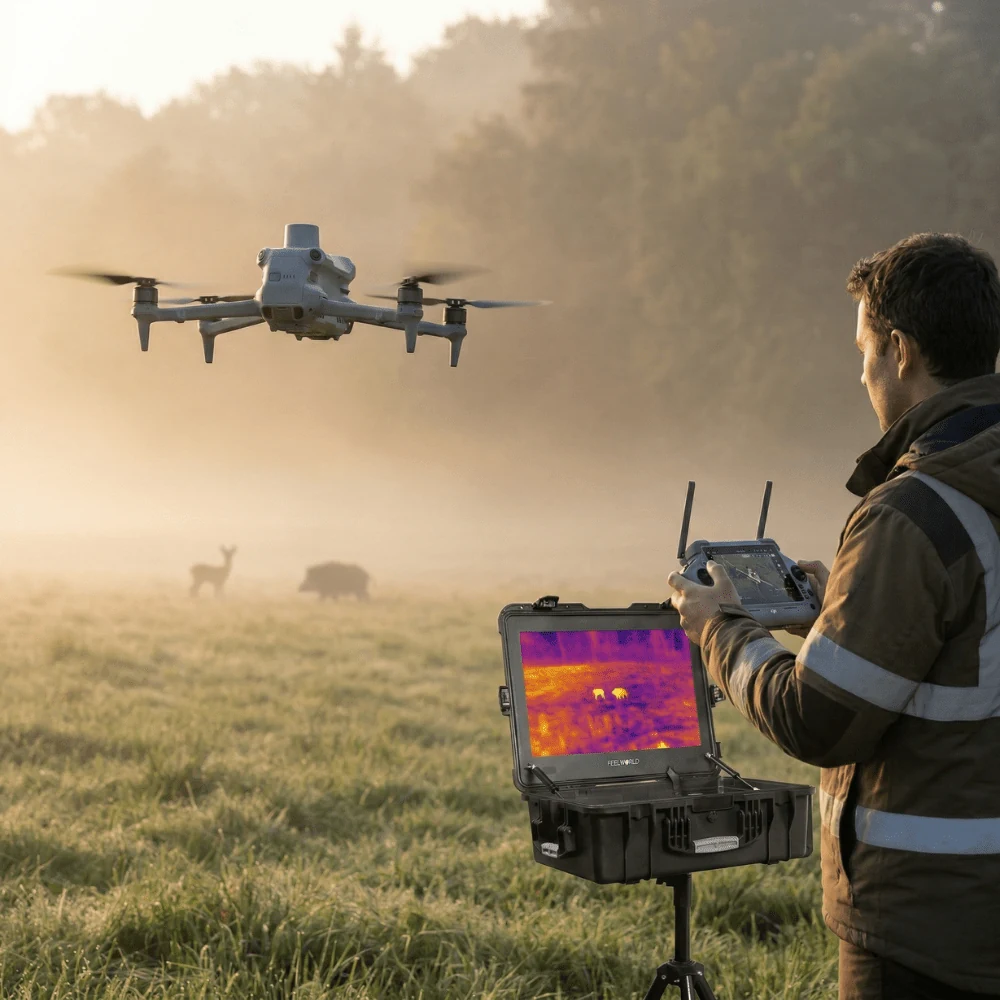
The model reaches its fullest form with drone-in-a-box: a DJI Dock installed on your site, from which a drone takes off, flies, lands and recharges with nobody on site. Operated under a DaaS contract, the dock turns site surveillance into a permanent service: scheduled patrols, alarm verification, response by night as well as by day.

It is the logical extension of everything above. If a contract spares you buying drones and recruiting pilots, the dock also spares you tasking someone for every flight: missions run themselves, supervision is remote, and your teams see only the outcome, alerts, images, reports. For industrial sites, critical infrastructure and security services, this way of working, close to the DFR (Drone as First Responder) model, changes the nature of surveillance itself.

The subject deserves its own page: how the dock works, the BVLOS framework, patrol scenarios and alarm verification are set out on our autonomous drone surveillance page.

Your data stays in Belgium: NIS2 and sovereignty

Where do the images of your infrastructure end up? It is an awkward question, and one the Belgian drone sector almost entirely ignores. For a critical infrastructure manager or a public service, the default answer, a cloud managed outside Europe, has become steadily less acceptable since the NIS2 directive, transposed into Belgian law and overseen by the Centre for Cybersecurity Belgium.

Our DaaS contracts build that constraint in from the start: flights can be managed and data hosted through FlightHub 2 On-Premises, meaning on infrastructure you control, in Belgium, with no transit through a third-party cloud. Data sovereignty stops being a clause of principle and becomes a verifiable architecture: you know where your video feeds, your orthophotos and your inspection reports are, and who reaches them.

Use cases: who uses drone as a service in Belgium?

DaaS took hold first where missions repeat across extensive assets: rail and electricity networks, sensitive sites, long-running construction projects. Three families of use dominate among our Belgian clients.

Infrastructure inspection

Rail, high-voltage lines, bridges, industrial roofs: recurring inspection is the natural ground for a contract. National infrastructure managers such as Infrabel, Elia and the Walloon Public Service are among the organisations we support. How it works, which sensors and which deliverables are set out on our drone inspection page.

Security and emergency services

The Belgian Federal Police and more than 20 Belgian police and emergency zones work with us. For these services, DaaS answers a concrete problem: having an available, compliant aerial capability without tying up equipment budgets or turning police officers into fleet managers. Autonomous dock-based surveillance extends that use towards alarm verification and operational support.

Mapping and construction monitoring

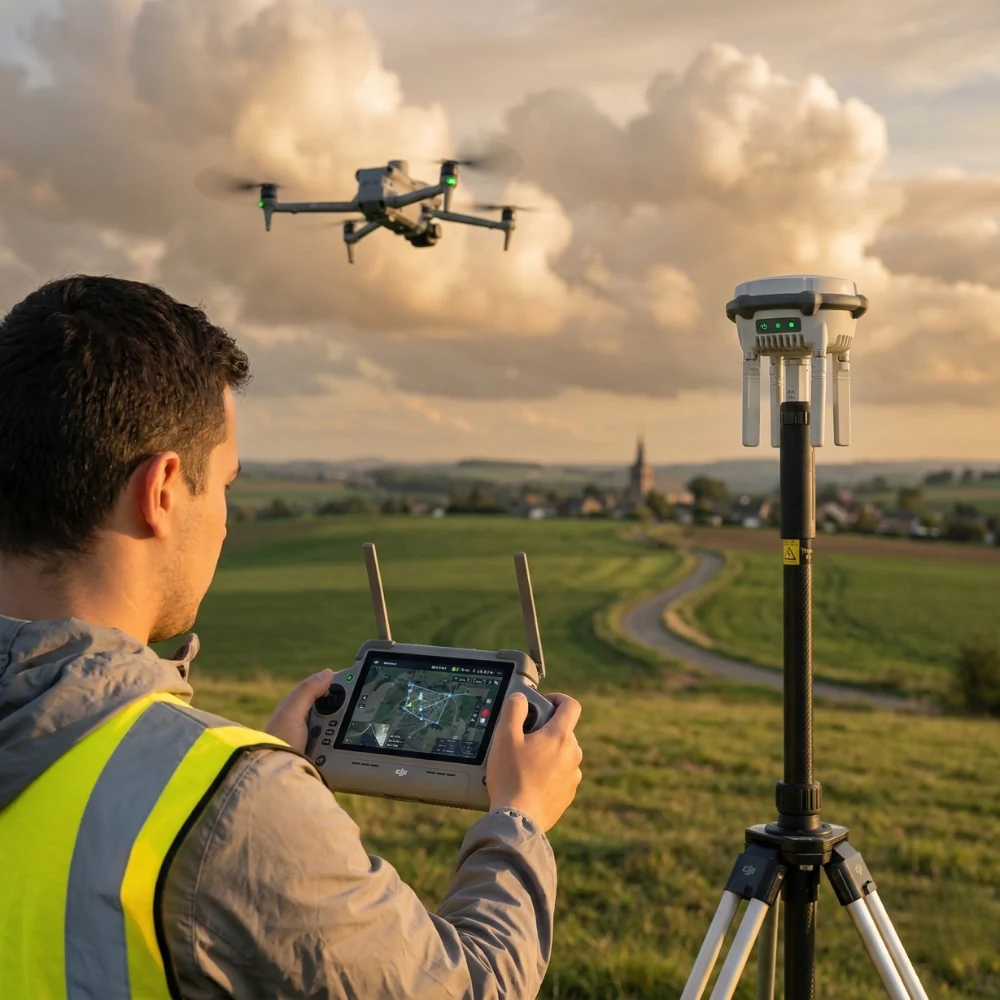
Surveyors, quarries and construction firms use the model to produce orthophotos and 3D models at regular intervals: every phase of a project is documented and volumes are tracked over time, without a single drone appearing on the company’s asset register.

SectorTypical recurring missionWhat DaaS replaces
InfrastructureScheduled network inspectionBuying a fleet and a dedicated team
Security and emergencyAlarm verification, operational supportZones acquiring and managing their own equipment
Construction and mappingPeriodic site monitoringSubcontracting renegotiated mission by mission

Getting started with PIM Consult

A contract is built in three steps. First, analysing the need: your sites, how often missions run, the deliverables you expect, your data constraints. Then the contract proposal: scope, hardware, commitments and subscription, in black and white. Finally deployment: commissioning, points of contact, first missions.

You keep a single point of contact from the first meeting through to day-to-day operation, backed by a company active since 2017 in integrating DJI Enterprise drones for the public sector and industry.

Ready to talk? Describe your need through the Drone-as-a-Service contact form or call us on +32 67 88 37 37. You will get a reply from a member of the team, not an answering machine.

FAQ

What is drone as a service?

A contractual model in which an operator provides the aircraft, the certified pilots, the maintenance and the compliance of every flight on subscription. The client organisation receives the results of the missions (images, reports, surveillance) without buying hardware or running a fleet.

How much does a Drone-as-a-Service contract cost?

The amount depends on the number of sites, how often missions run, the sensors and the deliverables. It is priced after an analysis of the need, as a subscription set in the contract.

DaaS, hire or purchase: which should I choose?

One-off mission: hire with a pilot. Daily use with an in-house trained team: buying stands up. Recurring missions with no wish to become an operator: DaaS, which brings hardware, pilots, maintenance and compliance into a single contract.

Who is responsible for flight compliance?

In a DaaS contract, the operator carries the operator liability: certification of remote pilots, authorisations, SORA risk assessments and BVLOS files where applicable. Your teams have neither a regulatory watch nor an EASA file to manage.

Where is the collected data hosted?

Hosting is set in the contract. We offer FlightHub 2 On-Premises: flight management and data storage on infrastructure you control in Belgium, with no transit through a third-party cloud, in line with the requirements of the NIS2 directive.

In short

You now know what drone as a service in Belgium covers: one contract, one accountable operator, and drone capability that works without you owning anything. Three things to take away:

Have a recurring mission in mind? Describe it through the Drone-as-a-Service form and you will quickly know whether the model holds up in your case.

Didier Van Nes, CTO and founder of PIM Consult SRL (Nivelles). A DJI Enterprise integrator since 2017, he supports more than 300 Belgian organisations (Infrabel, Elia, the Federal Police, emergency zones) on the integration, training and operation of professional drones. LinkedIn profile